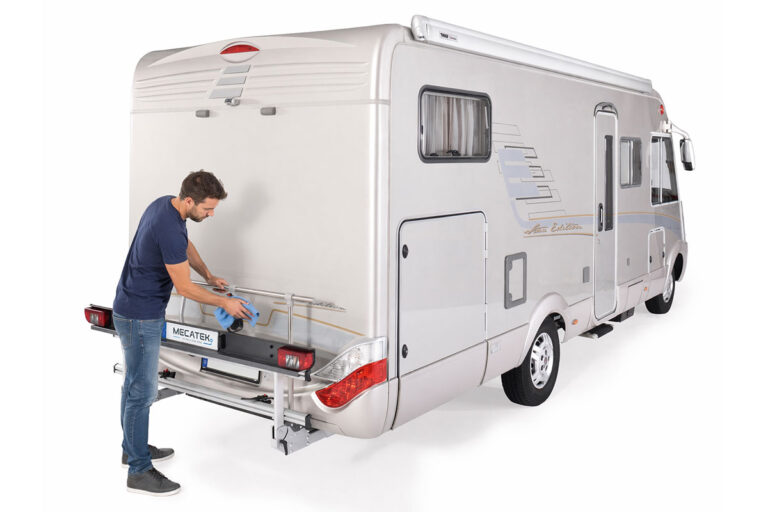
A motorhome is a heavy vehicle built on a utility vehicle chassis. The significant weight of the vehicle puts a great deal of stress on the original suspension. Over time or with heavy loads (motorcycle rack, full storage compartment), the sagging of the leaf springs becomes inevitable, which can eventually degrade the comfort and road holding of the motorhome.
To avoid this problem, installing air suspension for motorhomes is the most effective solution. At Mecatek (formerly Sawiko France), we have developed specific solutions such as the MCK Plug & Drive and MCK AIR-DRIVE ranges. But what does the installation of this equipment actually involve? We’ll explain everything.
The steps to follow to install air suspension on your motorhome
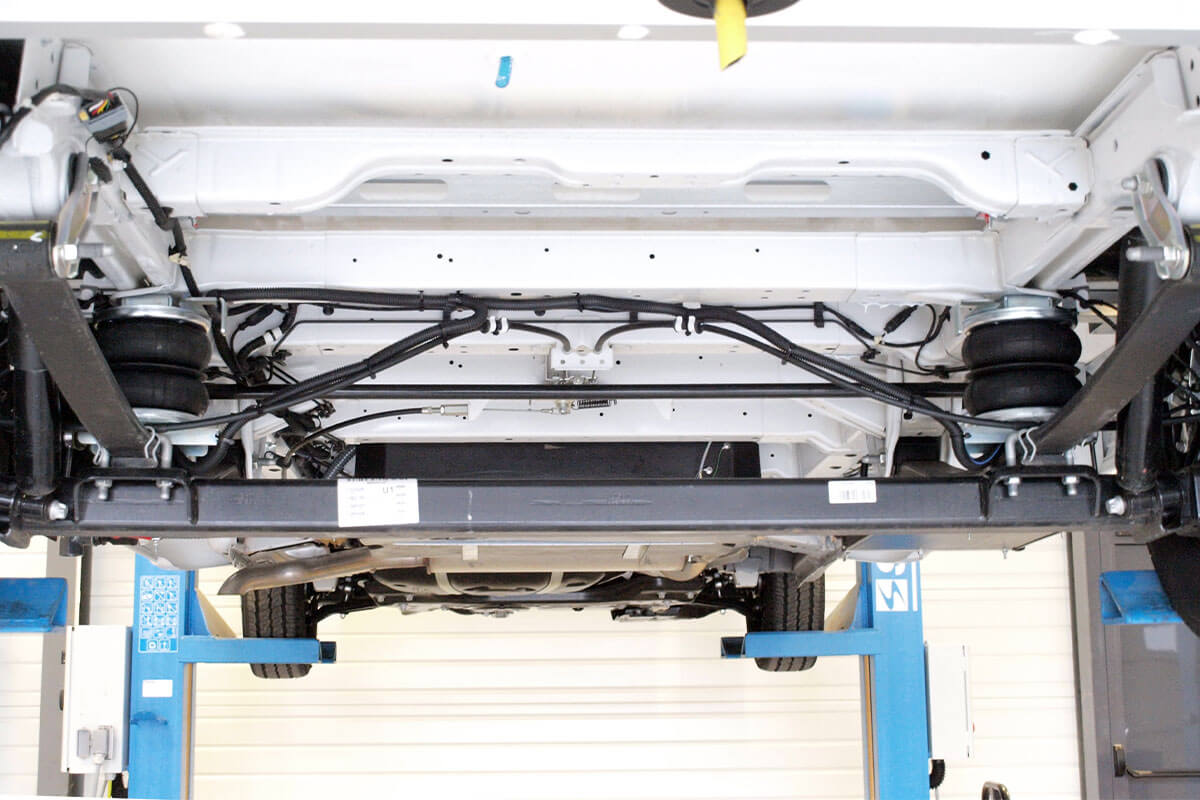
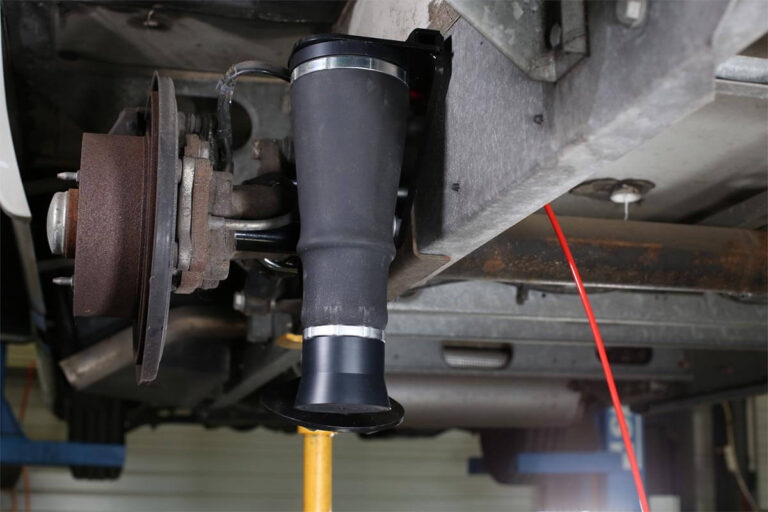
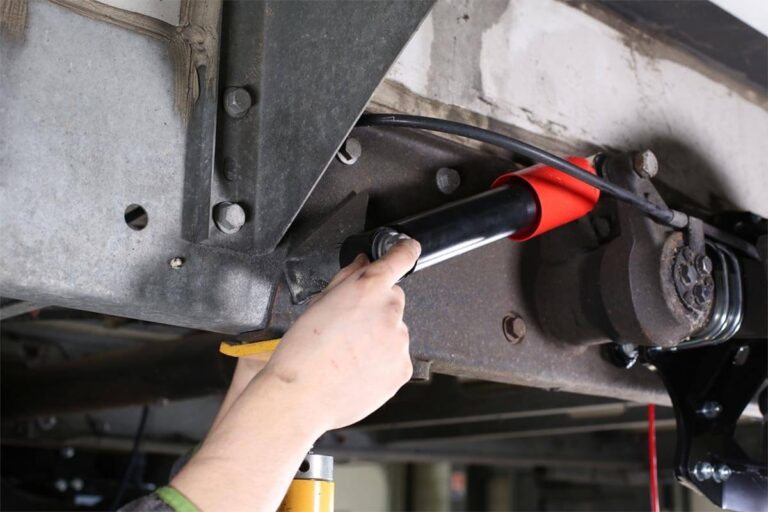
The installation of Air suspension for motorhomes is a precise technical operation. It involves adding air springs between the chassis and the rear axle. Here are the main steps for fitting an MCK AIR-DRIVE type system on an AL-KO chassis:
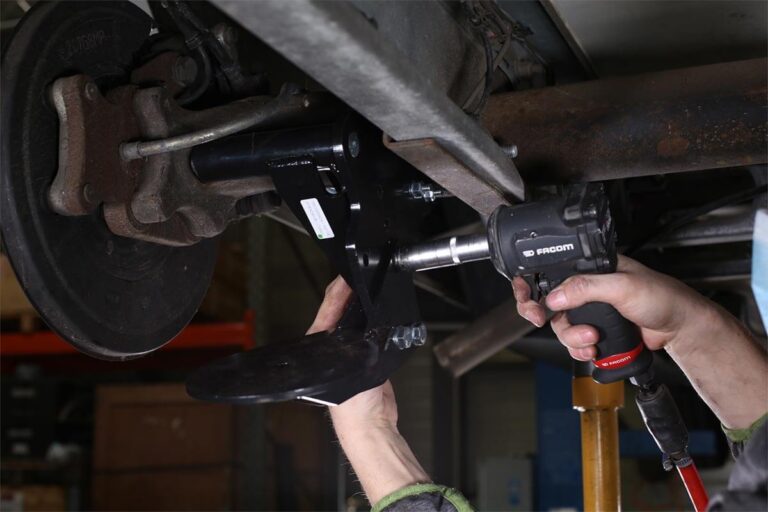
- Preparation and assembly: start by defining the position of the cushion support and proceed with pre-assembly of the mounting plate.
- Dismantling and Access: The vehicle is secured on a lift sized to support its weight, allowing for the removal of the wheels and access to the original shock absorbers. If using a two-post lift, secure the vehicle with appropriate axle stands.
- Install pneumatic components: install the coupling flanges and air fittings on each cushion before placing them on their respective supports.
- Replacement of shock absorbers: as part of a complete kit, the old shock absorber is removed to make way for a model optimised for the pneumatic system.
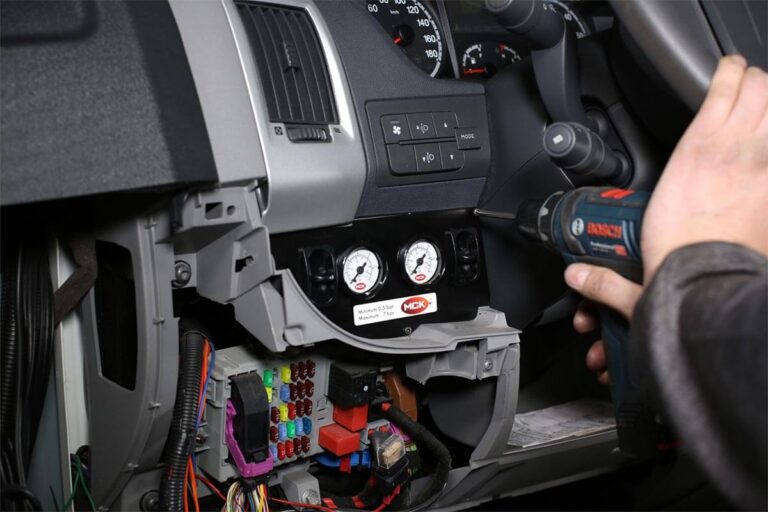
- Air circuit and electrical network: this is the most meticulous stage. The air pipes must be routed under the chassis (with protective sheathing), the necessary access points drilled (such as the battery tray), and the 12V compressor installed.
- Cockpit: we finish with the installation of the control panel in the cabin and the final connection of the system.
Points to watch out for during installation
Although many homeowners might be tempted to carry out this operation themselves, several critical points require professional expertise.
The first is the sealing of the circuit. A simple leak in a pneumatic connection can render the system inoperable and unbalance the vehicle's attitude in a few hours.
Next, the routing of pipes and cables must be impeccable: they must never be in contact with moving parts or heat sources (exhaust).
Finally, the compatibility of air suspensions with the chassis is an essential condition for the success of the installation. Our solutions can be fitted to Fiat, Ford, Mercedes, or IVECO, but each structure has its own mounting points. Improper fixing could irreversibly damage the chassis and compromise passenger safety.
Adjusting and using air suspension after installation
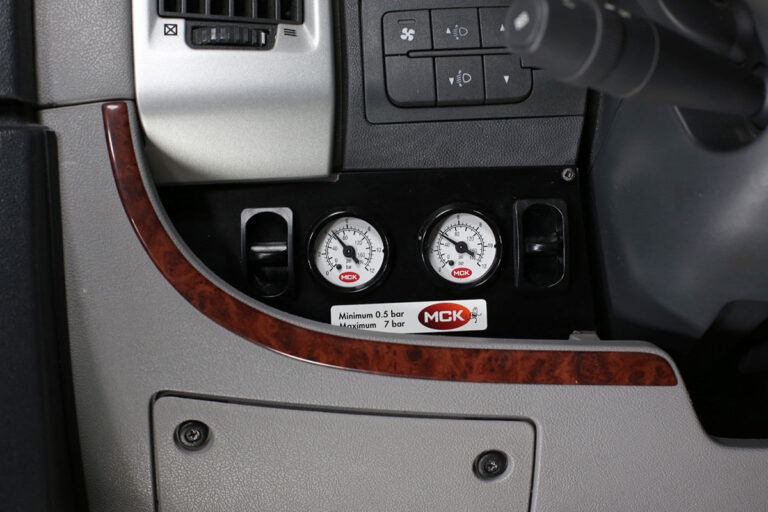
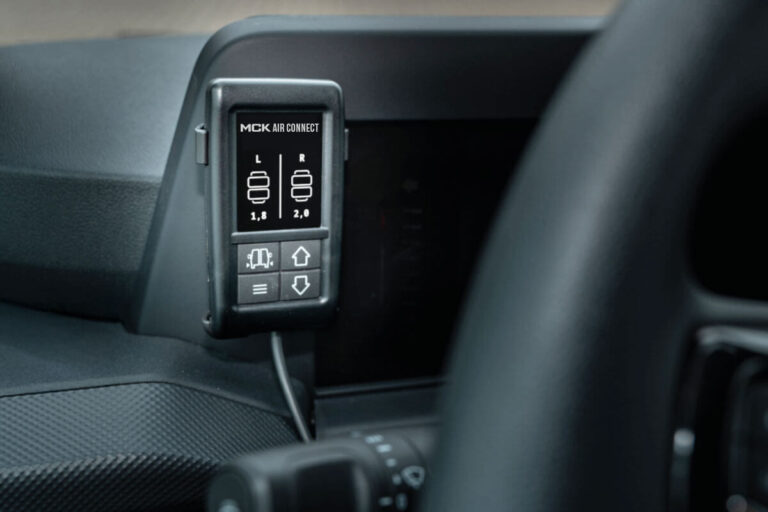
Once installation is complete, operation is very simple thanks to the control panel. The system allows you to control the pressure of the cushions on demand.
Depending on the chosen suspension model, several control technologies are possible: a switch/up-down button control panel with pressure gauges, a digital control box with a screen or, the cutting-edge solution, app-controlled via a smartphone for maximum user comfort!

The main purpose of adjusting air suspension is to correct the vehicle's stance. If your motorhome is leaning backwards due to a significant overhang, you can increase the pressure to level it horizontally. This helps to position your headlights correctly and improve steering.
On the road, air suspension reduces body roll in corners and improves stability when overtaking lorries or in crosswinds. Furthermore, the temporary lifting function is particularly useful for going over speed bumps or mounting kerbs without risking damage to the undercarriage.
The installation of air suspension makes driving a motorhome safer and more comfortable, especially on uneven roads. To ensure correct and secure fitting to your specific chassis, do not hesitate to contact our specialised technicians at requesting your free quote.
Important recommendation
Before changing the tyres or fitting snow chains/socks, it is important to reduce the air cushion pressure to prevent damage when lowering the vehicle. We do, however, recommend not to go below 0.5 bar pressure.