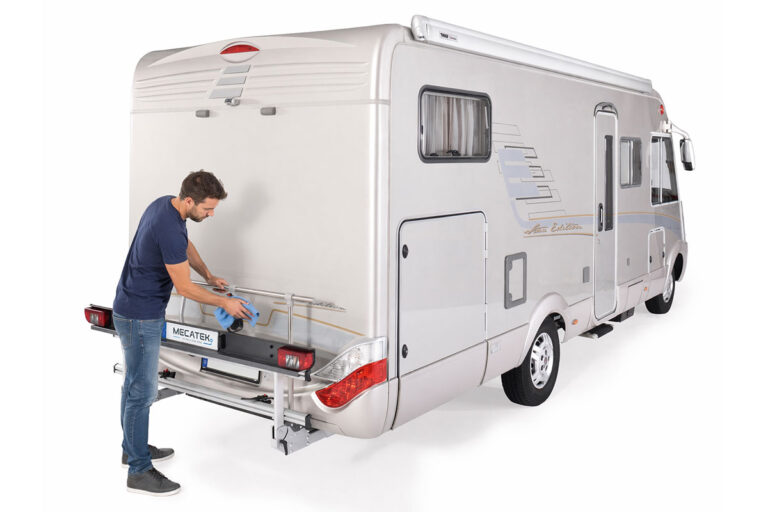
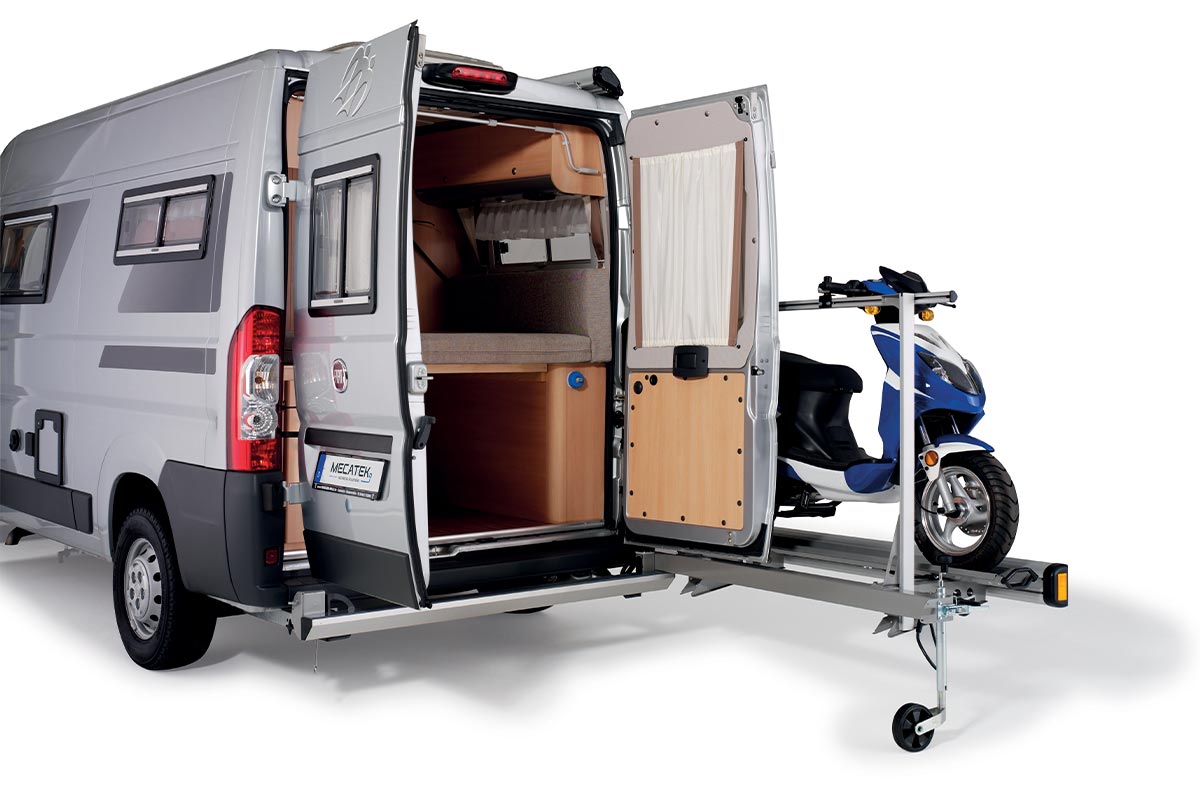
Installing a motorbike carrier is an ideal solution for gaining independence on your motorhome or camper van trips. However, transporting a two-wheeled vehicle at the rear of a vehicle involves technical constraints.
Between the Highway Code, load limits, and safety standards, it is imperative to know and respect the legal framework. We'll review the regulations so you can drive in full compliance.
Motorcycle carrier regulations, what the law says
A motorcycle carrier is considered a detachable piece of equipment or an extension of the chassis. Unlike a trailer, it does not have its own registration document, but it directly impacts the characteristics of the towing vehicle, starting with its payload.
The main rule to know concerns the dimensions of the motorcycle carrier. In France, the total width of your load must not exceed 2.55 metres. In length, the overhang at the rear must not exceed 3 metres.
The obligation of approval must also be respected: all motorcycle carriers for motorhomes it benefits from European approval (Directive 2007/46/EC). This certification guarantees that the motorcycle carrier has undergone resistance and safety tests in the event of a collision or emergency braking.
Plates, lights and signs: obligations to comply with
According to the Highway Code (Articles R313-1 onwards), the load must not obscure the lighting devices or the registration plate:
- Lighting signals: if your motorbike or the motorbike rack obscures the lights on your motorhome, fitting a reminder light bar is obligatory.
- Number plate: it must be fixed permanently to the motorcycle carrier, be illuminated at night, and correspond exactly to the vehicle's registration number. Handwritten plates are strictly forbidden.
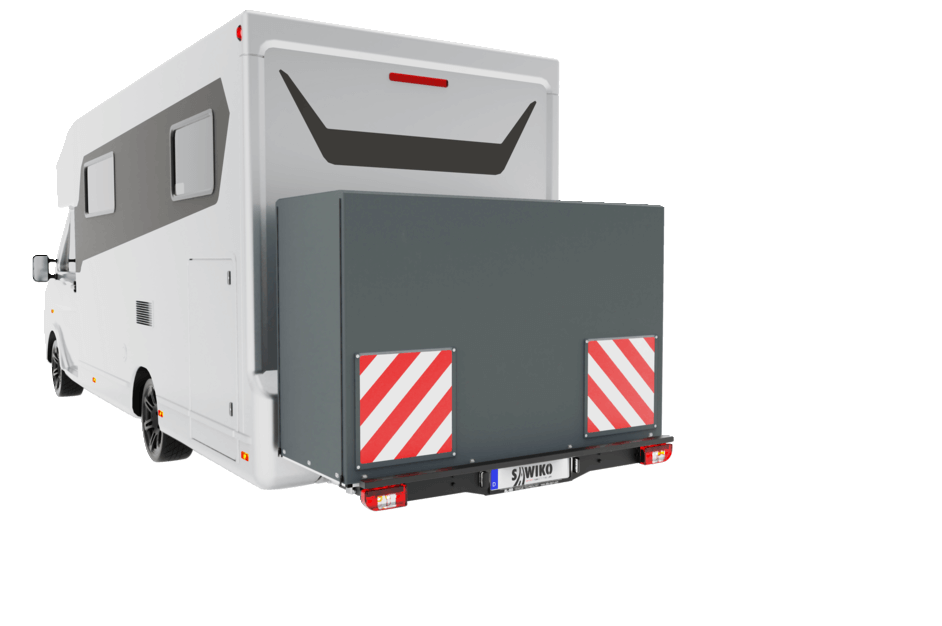
- Specific signage: if you are travelling abroad, be vigilant. In Italy or Spain, a reflective (red and white) sign is mandatory for any protruding load, even if your motorbike racks for vans is used without a motorbike.
Be mindful of the motorcycle carrier's load capacity
It is not enough to check that your motorbike weighs less than the maximum capacity of the motorcycle carrier. It is especially important to calculate the load on the rear axle. Due to the leverage effect (the overhang), a 120 kg motorbike can exert a much greater force on the rear axle, which can lead to exceeding the technical limit authorised by the manufacturer.
An overload of the rear axle can lead to a loss of grip at the front, degrading steering, braking efficiency, and causing premature wear on the rear tyres. This is why the Sawiko motorcycle carriers are designed to be fitted directly onto chassis extensions, offering better weight distribution and more stability.
Rules for securing and safety to observe when transporting your motorcycle
The law requires that all loads must be secured in such a way that they do not cause damage to people or property, and do not drag on the ground. For a motorbike carrier, this implies the use of professional-quality straps and, ideally, wheel chocks for the front and rear wheels.
Safety also depends on the mounting structure. A motorcycle carrier is not simply attached to a bumper. It requires specific chassis reinforcements if it is not originally designed to withstand such stresses.
Before any installation, we recommend that you check your vehicle's technical data sheet. Incorrect fitting can not only result in a fine, but more importantly, invalidate your insurance cover in the event of a claim.
Before every departure, it is important to check the tyre pressure for both the front and rear.
To ensure your installation complies and to choose the right equipment for your vehicle, professional assistance is the best option. Don't hesitate to call upon our expertise: Request your free quote From today, to equip your motorhome or van safely.