Unlike a simple car journey, going on a trip in a motorhome requires meticulous preparation. Do you intend to taking to the road with your motorhome or your converted van? Here's a complete checklist of everything you need to check carefully before setting off.
Planning your itinerary while remaining flexible
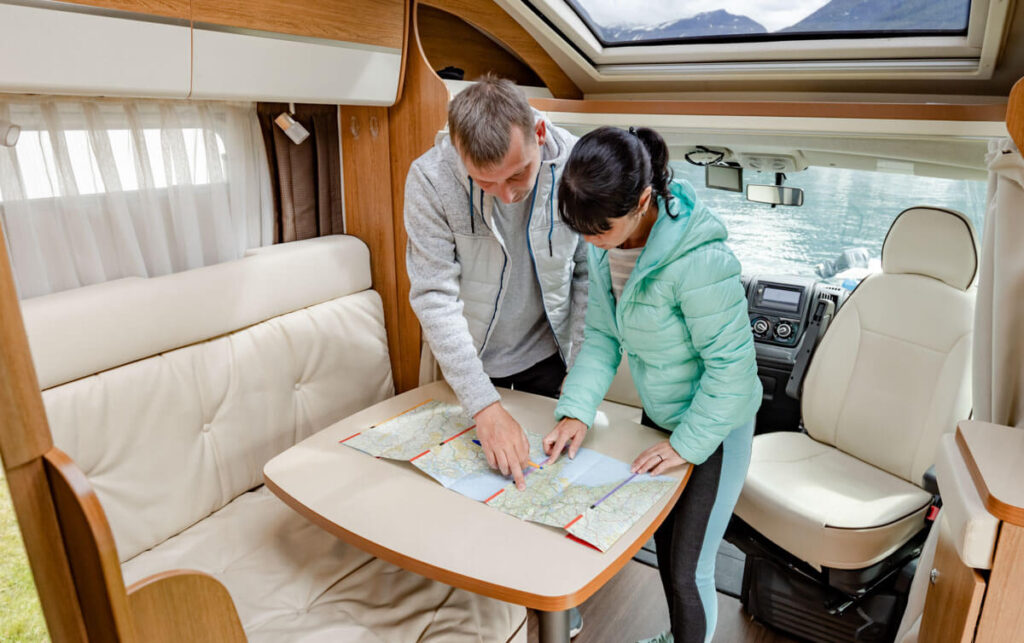
Before setting off, it's essential to think about your journey. A good planning makes it possible to anticipate the key stages of the journey: parking, refuelling points, visits, but also driving time.
It is advisable to don't underestimate distances. In a motorhome, the average speed is often lower than in a car, especially if you use secondary roads. Having an idea of the service areas or campsites available on your route is essential. Some applications make it easy to identify all the rest areas on a given route.
But remember: the charm of the motorhome is also improvisation. Don't lock yourself into a rigid schedule. Plan for alternatives, especially in high season, when pitches can quickly become overcrowded.
Check the general condition of the motorhome
A motorhome is not exactly a vehicle like any other. It combines mechanics and housing, so there are twice as many points to inspect. A few days before departure, take the time to give the vehicle a complete overhaul.
The mechanics :
- Check the levels of engine oil, coolant, brake fluid and windscreen washer fluid.
- Inspect the condition and pressure of all tyres, including the spare.
- Test the lights: headlights, indicators, brake lights, reversing lights.
- Make sure the engine battery is in good condition and fully charged.
The living cell :
- Check the general state of repair: water leaks, damp, openings that don't close properly.
- Check the cell battery charge.
- Test the operation of equipment (fridge, heating, lighting, water pump).
A quick trip to the garage for a complete overhaul can be a good idea if you're going on a long holiday or if you haven't used your motorhome much in recent months.
Check vehicle documentation and papers
As with any vehicle, you must travel with up-to-date papers. Before you leave :
- Check that your vehicle registration document is on board.
- Make sure you have a valid insurance certificate, with certificate and sticker affixed.
- If your motorhome is more than 4 years old, it should undergo a technical inspection.
- If you're travelling abroad, check any obligations (vignette, ecopastille, etc.).
Always keep the instructions for specific equipment on board (bike racks, suspensions, jacks, boot, towbar, loading system, etc.). These documents are essential in the event of an intervention, in order to follow the manufacturer's recommendations. Incorrect handling may invalidate the manufacturer's warranty.
Don't forget to keep a digital copy of all these documents, useful in the event of loss.
Check that your coupling and equipment are in good condition and working properly
Trailer hitch
Before setting off on a long journey, be sure to check the’trailer hitch of your motorhome or van if it has one. Make sure that the screws are tight, as they can loosen after several thousand kilometres, and also check the condition of the towball.
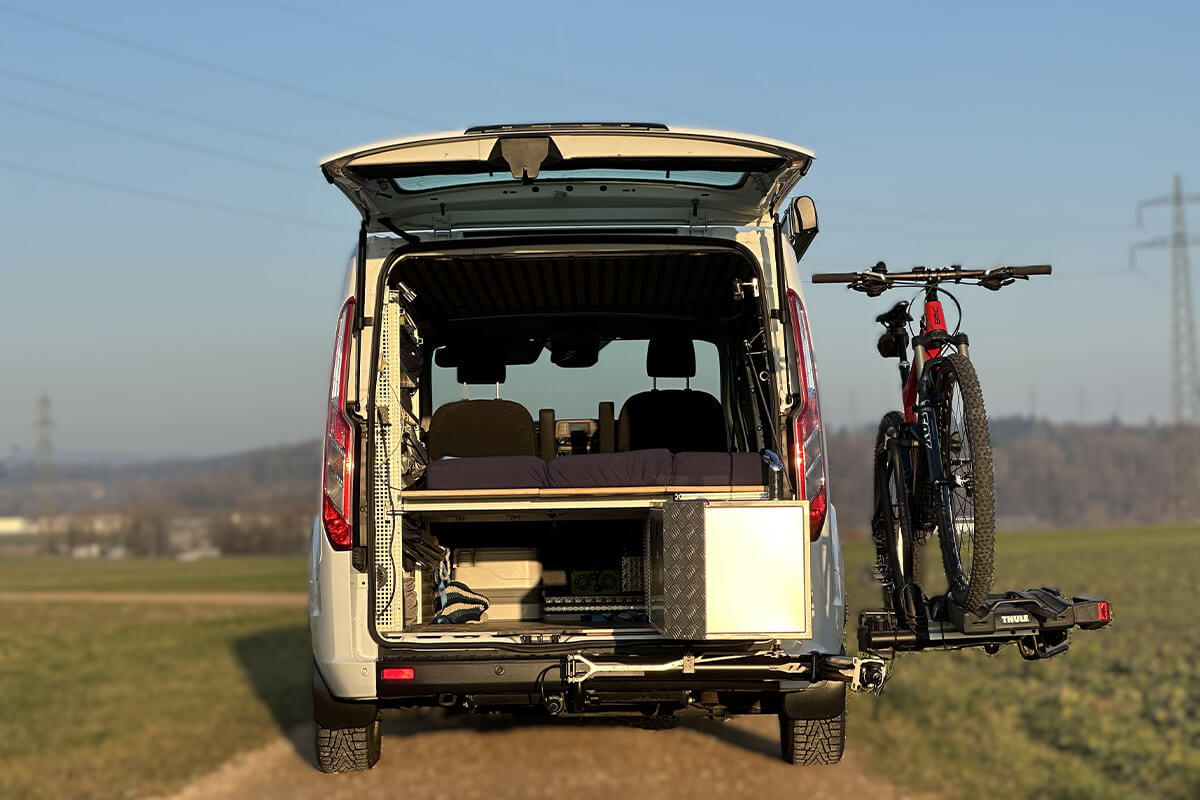
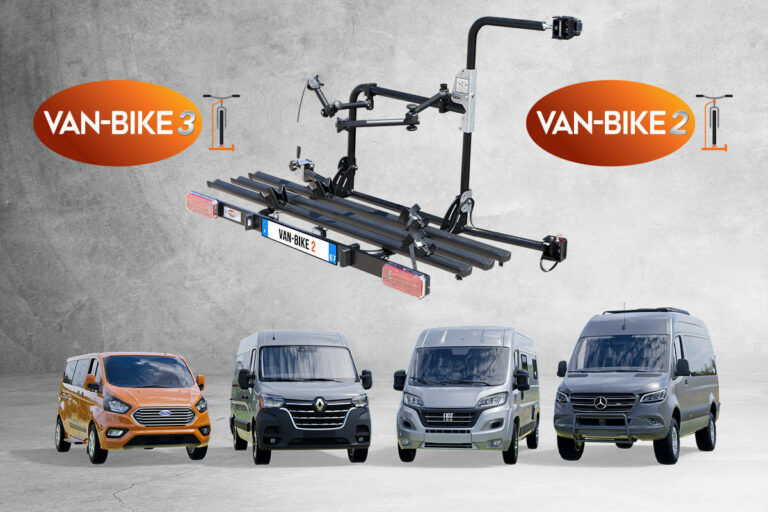
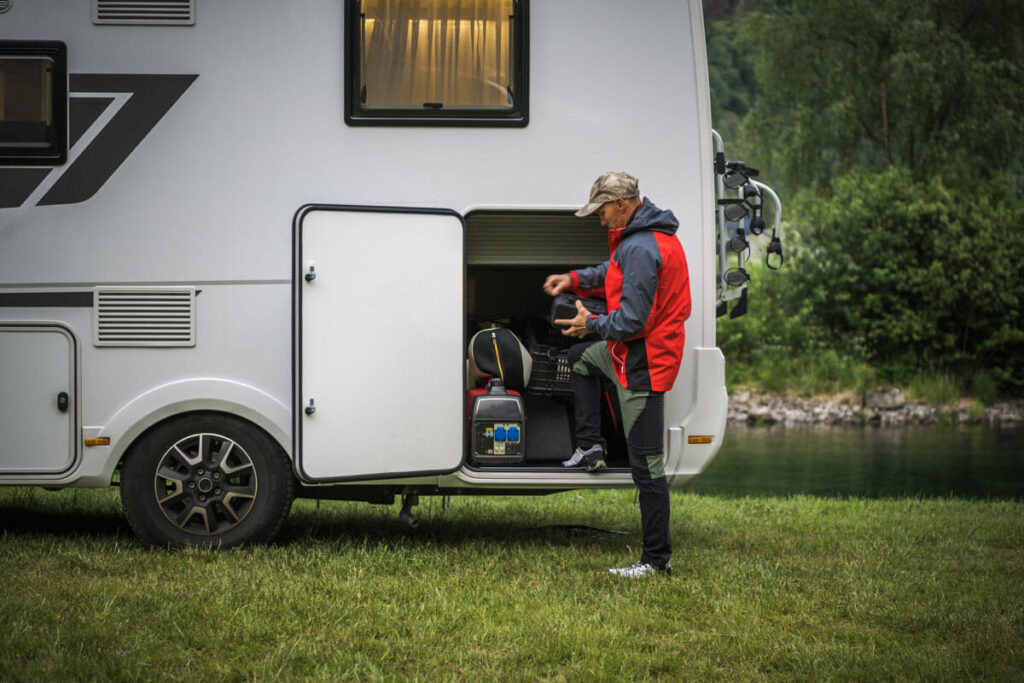
Bike rack, load carrier and external luggage compartment
These are the points that must be inspected:
- Tightening the screws,
- Presence of locking keys and all safety pins,
- Condition of tie-down straps and bicycle support arms,
- Good visibility of number plate and lights,
- The payload of the bike carrier.
Make sure securing bicycles and any accessories placed on the load carrier or in the luggage compartment. Turning the handlebars can prevent collisions with the bodywork.
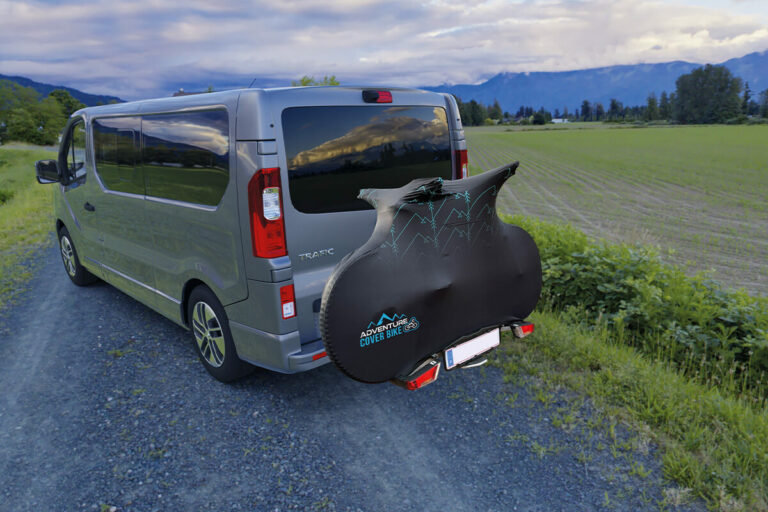
Keep overhangs to a minimum by placing heavy loads as close to the vehicle as possible. Protect your bikes with a suitable protective cover; we recommend using the Adventure Cover Bike.
Don't forget to bring a reflective sign to put on your bikes. This equipment is compulsory in some European countries, such as Spain and Italy.
Air suspension
- Check the overall condition of the system: air bags, hoses, harnesses, compressor.
- Test the operation of the air suspension Vary its height to check responsiveness and the absence of unusual noises.
- Adjust the pressure according to the manufacturer's recommendations and the vehicle's load.
Cylinders
As with the suspension, check that the hydraulic system and test it for leaks or abnormal noise.
The mechanical jacks must also be carefully tested, particularly with regard to the correct tightening of screws.
Check the motorhome's electrical range
The modern motorhome is a veritable mini-home powered by electricity. Electric range is therefore crucial, especially if you prefer to stop off in the countryside. Make sure that :
- The cell battery is fully charged.
- A connection cable is provided for the electrical terminals (with adapter if required).
- A solar charger or photovoltaic panels are functional if installed.
It is also important to limit energy-guzzling appliances (toaster, hairdryer) if you're not connected to a power point. A torch and rechargeable or battery-powered LED lights are also useful.
Managing water and sanitary facilities
A motor home carries three types of water: clean, grey and black. So you need to set off with a well-maintained system that is correctly filled or emptied. Before setting off :
- Fill the tank with clean water if you're going off on your own.
- Empty the grey water (waste water) in a service area provided for this purpose.
- Clean and empty the chemical toilet cassette (black water).
- Check the condition of joints and connections to avoid leaks.
Don't forget the specific products for chemical toilets and a clean water hose (ideally with a universal nozzle) to fill tanks easily.
Check the gas installation
Gas is essential for running your fridge, heating system or hob when you're not connected to the electricity supply. Here's what you need to check:
- Check that your gas cylinders are full.
- Check the fittings, hoses and regulators: no cracks, no suspect odours.
- Make sure your gas appliances (water heater, hob, trimix fridge) are working properly.
It is recommended to carry a spare gas cylinder, Especially when travelling abroad, where formats may differ.
Organising storage inside the motorhome
On the road, everything must be stowed away to prevent objects from moving around or being damaged. Proper stowage also makes life on board smoother and more enjoyable. Before setting off :
- Secure cupboards with doorstops or nets.
- Use storage bins to keep everything from sliding around.
- Pack a compact but comprehensive kitchen kit.
- Remember to secure fragile or noisy items (bottles, crockery).
It's always good to distribute weight intelligently to prevent the motorhome from tilting to one side. Place the heaviest objects at the bottom, near the central axle.
Cleaning and preparing the interior
A a clean, well-prepared interior, It's the key to a peaceful departure. Do a little housework before you leave: air the mattresses, wash the curtains if necessary, clean the fridge and leave it open if it's not being used. Check that the sheets, cushions, utensils and towels are in place.
Don't forget a few essentials, such as special chemical toilet paper, a first-aid kit and environmentally-friendly cleaning products (detergent, washing-up liquid, etc.).
Planning connectivity
When travelling, the internet connection is not always guaranteed. If you work on the road or want to stay connected, consider :
- A local or international SIM card with unlimited data.
- A 4G Wi-Fi router or hotspot.
- Offline navigation applications.
A well-charged tablet or smartphone with useful apps (weather, GPS, rest area location, etc.) is a good ally for taking to the road with complete peace of mind.
Take a first aid kit and basic tools
Even with the best preparation in the world, a breakdown or unforeseen event can still happen. So don't forget to pack a small mechanical and DIY first-aid kit containing :
- Fuses, spare bulbs, yellow waistcoat and triangle.
- Starter cables, tyre pressure gauge.
- Strong adhesive tape, hose clips, screwdriver, pliers.
- A bottle of water in advance for the engine (just in case).
A basic medical kit with dressings, antiseptics and painkillers is also essential.
Anticipating the weather and driving conditions
The weather has a direct impact on your comfort... but also on your safety. Before you hit the road, take a look at the weather forecast throughout your itinerary.
Thunderstorms, strong winds, snowy spells and heatwaves can upset your plans.
A few tips to keep in mind:
- Download a reliable weather app.
- Plan alternatives in case of bad weather: camping rather than driving in the open country, a day's break rather than driving in the rain.
- Wind can particularly affect motorhomes, which are more sensitive to sideways gusts. If the forecast calls for strong winds, it's best to postpone your journey or adjust your speed.
Driving, remain vigilant A motorhome is taller and heavier than a car, and requires more anticipation than a car. When driving downhill, control your speed so as not to put too much strain on the brakes; when driving uphill, control your acceleration. And above all, adapt your driving depending on the weather.
Thinking about daily life on board
Travelling in a motorhome isn't just about driving: it's also about living in one. To make everyday life as pleasant as possible, a few practical adjustments can really make a difference. Before you set off :
- Prepare a playlist or podcasts for long journeys.
- Pack board games, books or activities for rainy evenings or long breaks.
- Try blackout curtains or blinds for your motorhome: they're essential for preserving your privacy, especially in city car parks.
- Take along a compact broom or a small dustpan to keep the floor clean, because dust is a fast invader in a motorhome!
And what about the kitchen?
- Plan meals that are simple to prepare, but varied: pasta is fine... but not every day!
- Think about condiments, spices, coffee, tea and airtight tins to store leftovers.
- A small portable barbecue can be a real bonus for outdoor cooking.
Organising life on board a motorhome is what turns a simple vehicle into a real little house on wheels. A little’tip, of storage and good mood That's the recipe for peace of mind in your motorhome.
Prepare well to leave with a clear head
Taking to the road in a motorhome gives you a break from the hustle and bustle. However, this freedom needs to be organised. Good preparation can help you avoid many setbacks and enjoy every stage of your journey with peace of mind.
This checklist will make sure you don't forget any crucial points. Whether you're away for a weekend or several weeks, comfort and safety must always come first.
Take a look around the motorhome, take the time to tick off each point, and enjoy the pleasure of setting off: everything's ready, all that's left to do is drive!