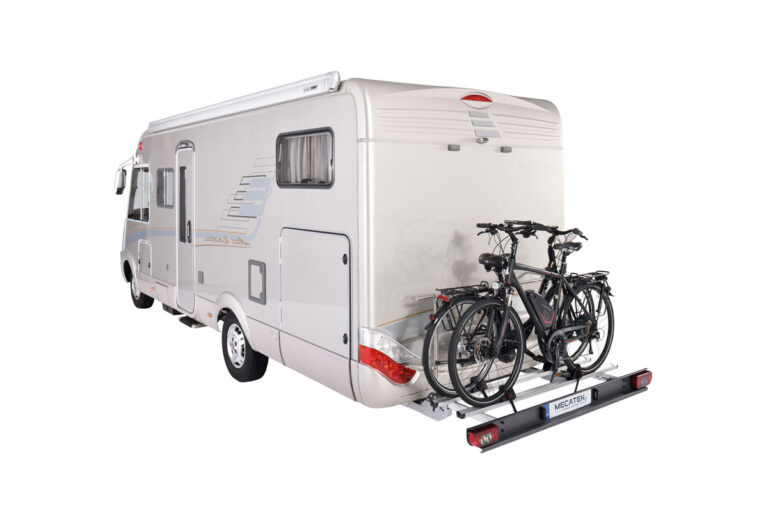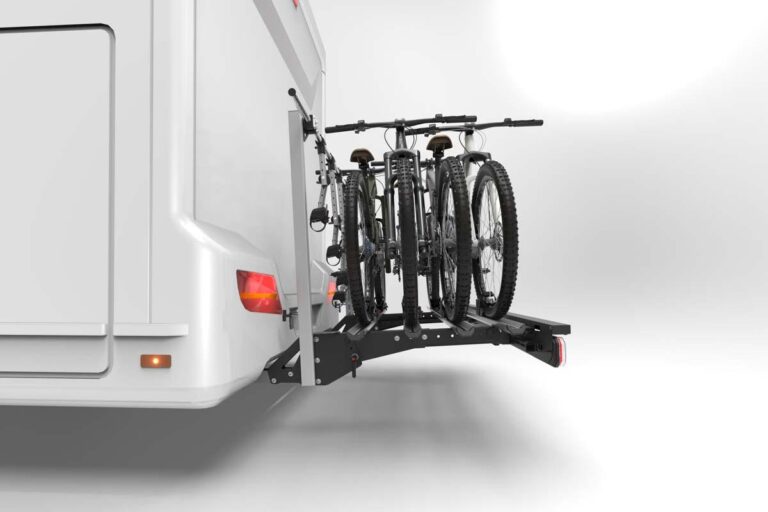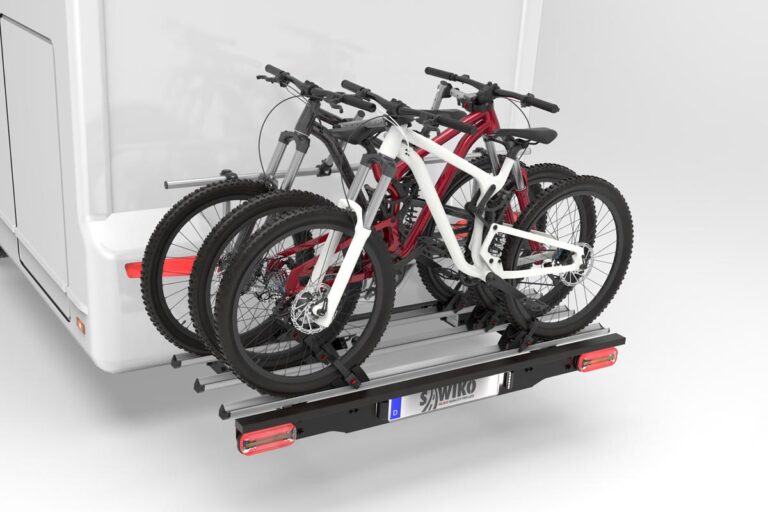
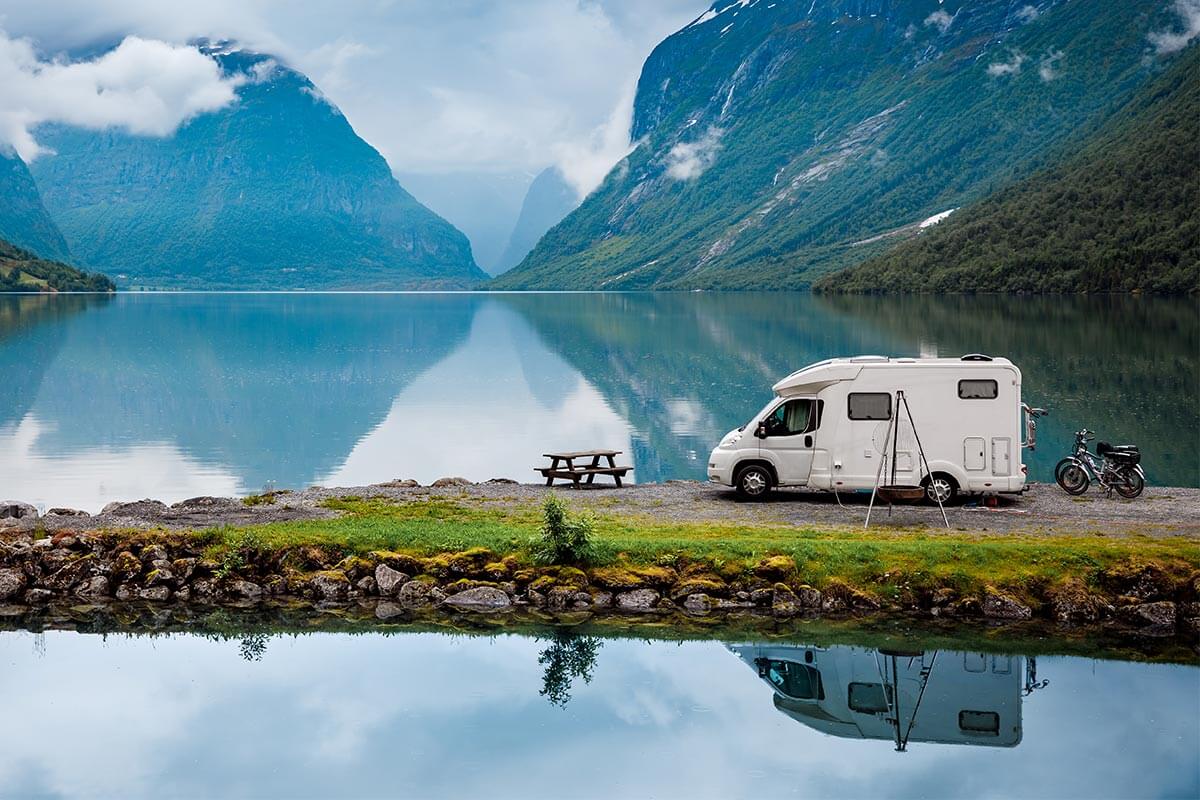
Using a bike rack is common for transporting bicycles on a motorhome. This option is preferable to transporting them in the storage compartment or via a trailer, in order not to lose interior space or road manoeuvrability.
However, bike racks must comply with specific technical standards, particularly concerning load limits. Wondering what maximum weight a motorhome bike rack can actually support? We'll tell you.
What is the maximum load according to the models?
Not all bike racks for motorhomes have the same technical resistance. The load capacity of a bike rack directly depends on the design of the equipment, its materials, and its mounting method (wall-mounted, tow hitch-mounted, or directly attached to the chassis).
At Mecatek, our range of Bike rack for motorhome is exclusively made up of approved models meeting European standards and displaying a robust payload ranging between 60 and 130 kg. This capacity varies depending on the configurations:
- The P-Line and ST-Line models attach to the tow ball for greater flexibility. They are perfectly calibrated for an average load of two or three bikes.
- The Compact-Line model can transport up to 5 bicycles at the same time, while offering a folding system to reduce the motorhome's footprint when empty.
- Le E-bike bike rack offers a robust yet lightweight alternative for transporting 2 to 3 bikes thanks to its 80 kg payload capacity
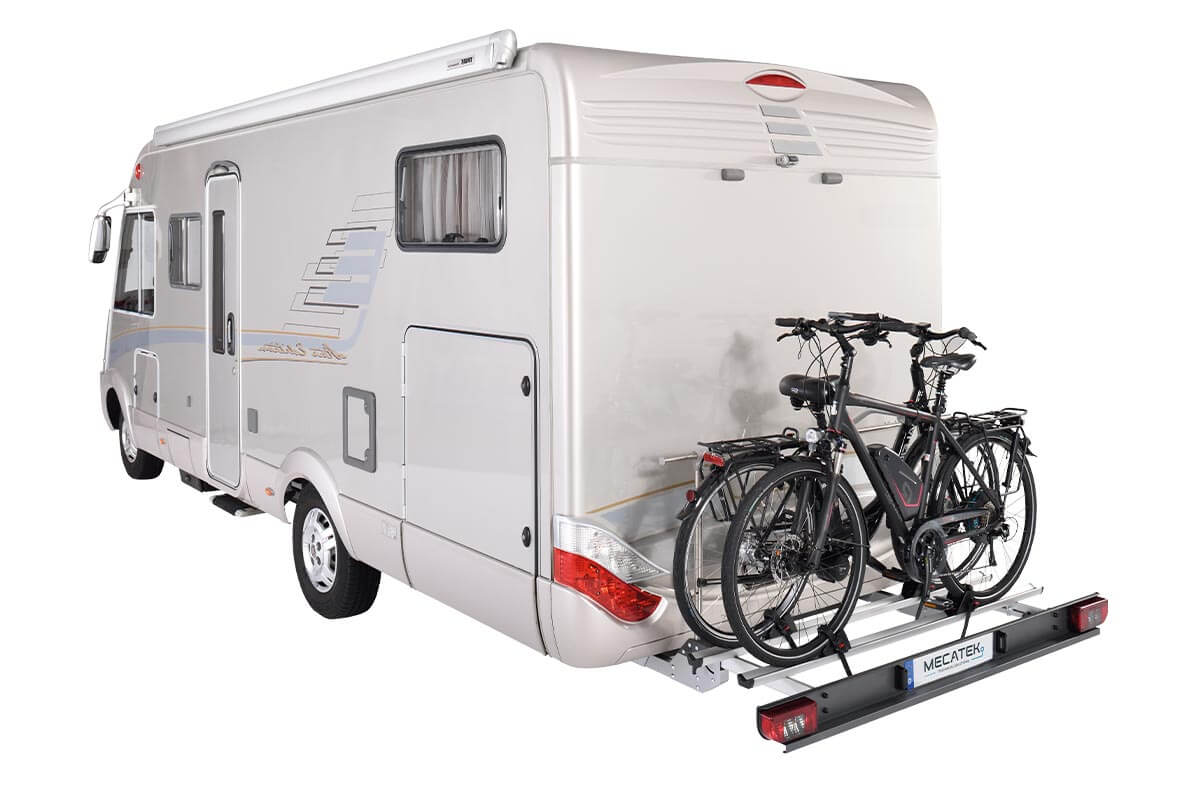
The specific case of electric bicycles
A classic bicycle weighs on average between 12 and 15 kg, whereas an e-bike typically weighs between 22 and 35 kg due to the motor and battery.
This difference involves technical constraints. Transporting two or three e-bikes absolutely requires a heavy-duty rack, such as the E-Bike model designed specifically for this purpose.
To optimise the weight of the whole setup, we recommend removing the detachable batteries from your electric bikes and storing them inside your motorhome during journeys.
Risks associated with an overload
Exceeding the maximum payload of your bike rack or the total load capacity of your motorhome (the PTAC) leads to mechanical and safety risks. Overloading can prematurely damage fixings and cause the supports to break in the event of a shock or emergency braking.
Adding excessive weight to the rear of a motorhome can accentuate the cantilever effect. A vehicle that is too heavy at the rear risks scraping the road when going over speed bumps or lightening the load on the front axle, affecting grip and steering precision.
How to properly distribute the weight on your bike rack?
Systematically place the heaviest bicycle (usually the largest e-bike) on the rail closest to the motorhome body. The lighter bicycles should occupy the outer rails.
Also, ensure your chassis configuration allows for such an installation. If the distance between the end of the original chassis and the rear bumper is too great, adding chassis extensions and suitable supports beforehand is essential to reinforce the structure.
The installation and technical compliance of a motorhome bike rack require specific expertise. To address your concerns regarding your vehicle's payload and validate your chassis compatibility, Request your free quote with Mecatek experts.